Writes the guides on Furniture Deals: sizes checked against the listings, prices and ratings read from Amazon India.
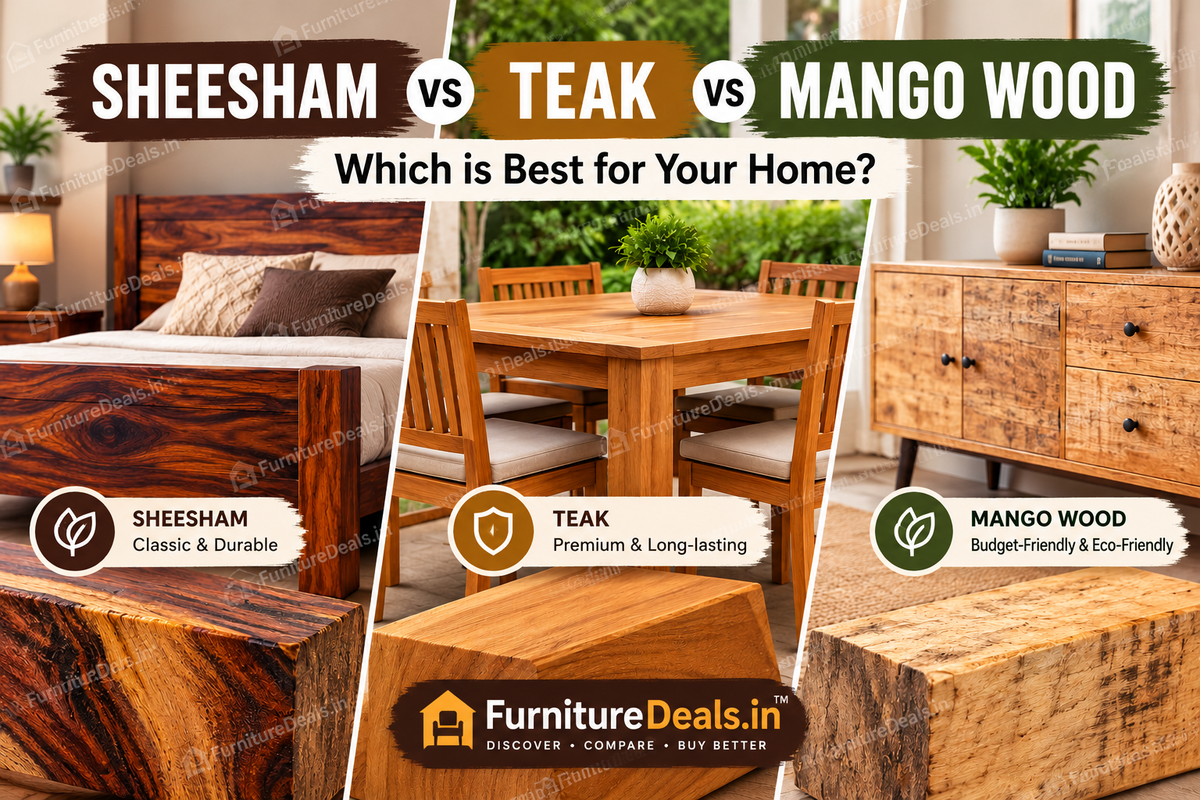
Sheesham Wood vs Teak Wood vs Mango Wood: You’ve decided to buy solid wood furniture. Smart choice. But the moment you start looking — on Amazon, in a showroom, on a furniture site — three names keep showing up: sheesham, teak, and mango wood.
The salesperson says all three are “durable” and “long-lasting.” Every website says the same thing. Nobody gives you a straight answer.
So here it is — a real comparison. What each wood actually costs, how it holds up in Indian homes, what it looks like five years later, and which one makes sense for your specific situation.
What Are These Three Woods, and Where Do They Come From?
Before comparing, it helps to know what you’re actually buying.
Sheesham wood (also called Indian Rosewood, or Dalbergia sissoo) is the most common solid wood used in furniture across North India. Most of it comes from Rajasthan — Jaipur and Jodhpur are the two big manufacturing centres. When you buy a solid wood bed or wardrobe on Amazon India, there’s a good chance it’s sheesham, even if the listing doesn’t say so clearly.
Teak wood (locally called sagwan) has been the traditional benchmark for premium Indian furniture for generations. The best teak historically came from Burma (Myanmar), but Indian plantation teak from states like Kerala, Maharashtra, and Karnataka is now widely available. It’s denser, has more natural oil, and carries a price to match.
Mango wood is the newest of the three in mainstream furniture. It comes from mango fruit trees — once a tree stops producing fruit (usually after 15–25 years), the wood is harvested for furniture. This makes mango wood genuinely eco-friendly, not just marketing. Most mango wood furniture comes from North India and Rajasthan, and it’s showing up increasingly on Amazon.
Sheesham vs Teak vs Mango Wood: The Quick Comparison
For those who want the short version first:
Sheesham
Teak
Mango Wood
Hardness (Janka)
~1225 lbf
~1155 lbf
~1070 lbf
Raw wood price
₹1,200–1,800/sq ft
₹2,400–7,850/sq ft
₹800–1,200/sq ft
Furniture price (bed)
₹12,000–35,000
₹45,000–1,50,000+
₹8,000–25,000
Termite resistance
Good
Excellent
Moderate
Water resistance
Moderate
Excellent
Moderate
Maintenance needed
Medium
Low
Medium-High
Best for
Beds, wardrobes, dining
Outdoor, premium indoor
Budget furniture, decor
Lifespan (if maintained)
25–40 years
50+ years
15–25 years
Now the details behind each row.
Sheesham Wood: The Indian Workhorse
What Makes Sheesham Worth Buying
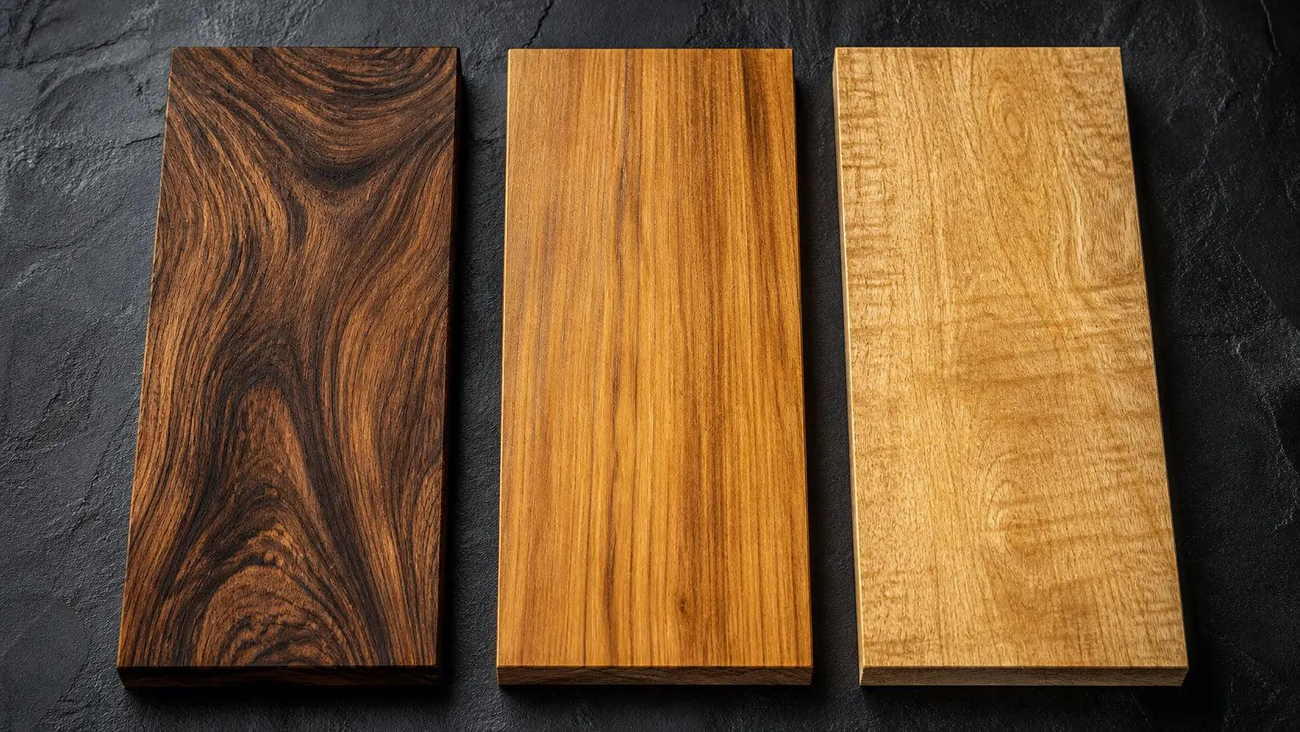
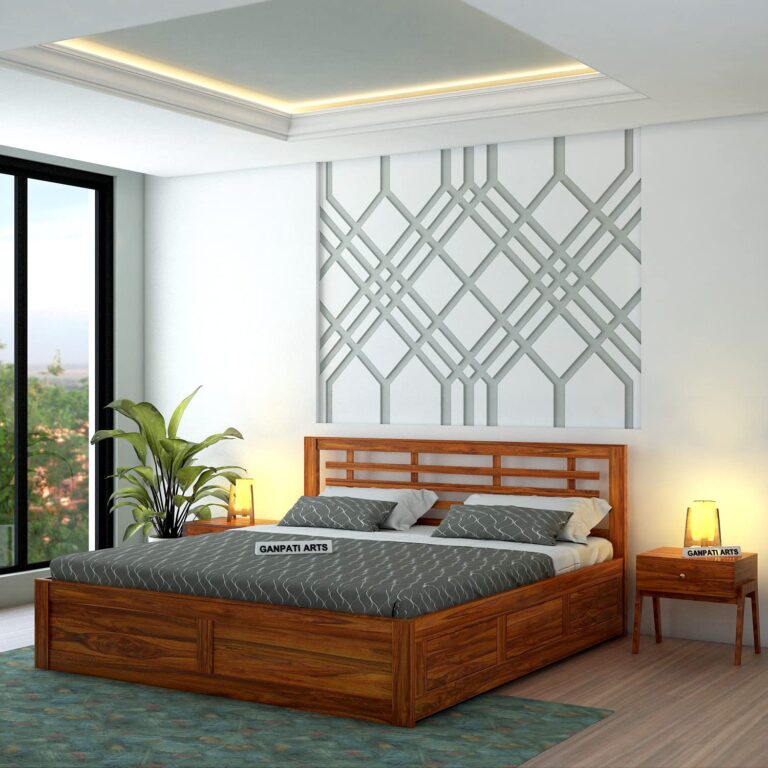
Sheesham (solid wood furniture Amazon India) is the sweet spot for most Indian homes. It’s genuinely hard (harder than teak on the Janka scale, in fact), it carves beautifully, and the grain — warm golden-brown with dark streaks — looks good in almost any interior.
The reason 70% of solid wood furniture sold online in India is made from sheesham is simple: it grows locally, it’s widely available, and it holds up well for indoor use. A properly made sheesham bed can last 25–40 years without any structural issues.
Most sheesham furniture you see on Amazon India is made in Jaipur and Jodhpur. If you want to understand why so much of India’s furniture comes from Rajasthan, this guide on Rajasthani furniture explains the manufacturing ecosystem behind it.
The Honest Downsides
Sheesham has some quirks that sellers rarely mention.
It expands and contracts with humidity changes. In monsoon-heavy cities like Mumbai or Chennai, poorly kiln-dried sheesham can warp slightly over time. In drier regions like Rajasthan or Delhi, this is rarely a problem. The fix: always check that a listing mentions “kiln-dried” or “seasoned” wood.
It also needs oiling or polishing every 1–2 years to keep its colour and prevent drying. Not a huge effort, but something teak doesn’t require to the same degree.
Sheesham should not be used outdoors or in high-moisture areas like bathrooms. It’s purely an indoor wood.
What Sheesham Furniture Costs on Amazon India
For beds specifically:
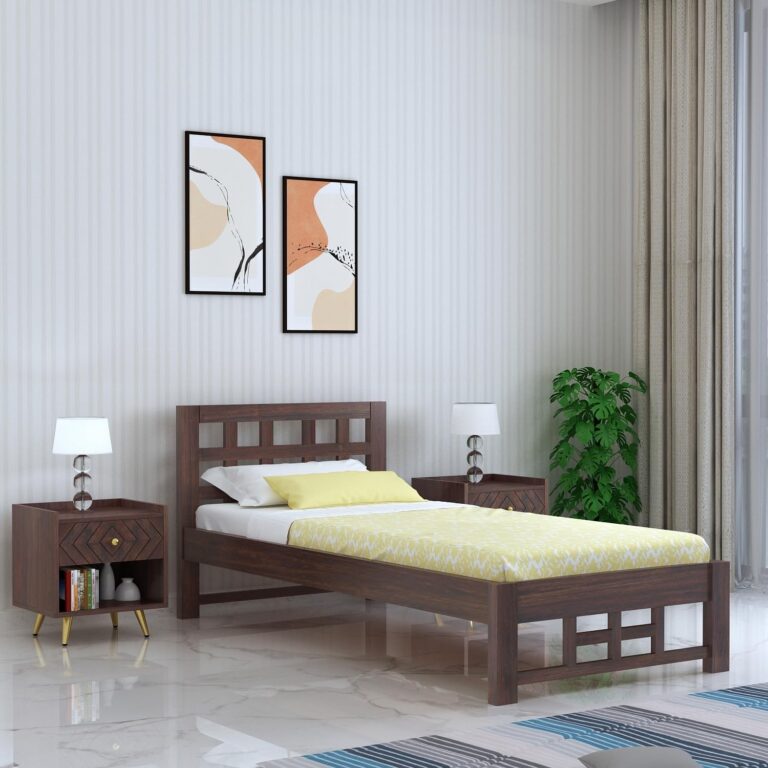
Single bed: ₹10,000–18,000
Queen size bed: ₹18,000–35,000
King size bed (best wood for bed India) : ₹22,000–45,000
If you want to see the best-rated sheesham beds available right now, the sheesham wood beds section on FurnitureDeals.in lists 500+ pieces scored by buyer rating, price, and listing quality — so you’re not going in blind.
Teak Wood: The Premium Choice That Justifies Its Price
Why Teak Has This Reputation
Teak wood is expensive for concrete reasons, not marketing hype.
It has the highest natural oil content of any commonly used furniture wood. That oil does two things: it repels water naturally, and it keeps the wood from drying out and cracking. This is why old teak furniture — the kind your grandparents had — still looks usable 50–60 years later.
Teak also has a natural silica content that makes it resistant to insects, fungi, and most environmental damage. You can place teak furniture on a veranda that gets monsoon rain, and it won’t rot. Sheesham and mango wood cannot do that.
For outdoor furniture, garden seating, or furniture in humid climates (coastal cities, Kerala, Northeast India), teak is genuinely the right choice.
The Price Reality
This is where most buyers pause.
Raw Indian teak wood costs ₹2,400–3,500 per cubic foot. Burma teak — which is even higher quality — runs ₹6,000–8,000 per cubic foot. Compare this to sheesham at ₹1,200–1,800 per cubic foot, and you understand why teak furniture costs 3–5x more.
A proper teak wood queen size bed starts at around ₹50,000 and goes up significantly. Most “teak” furniture you see listed cheaply on Amazon is either plantation teak (lower grade), teak-finish MDF, or the seller is being misleading about the material.
Always read the listing carefully. If a “solid teak bed” is listed at ₹18,000, it’s not solid teak. It’s either engineered wood with a teak veneer, or plantation teak with a lot of filler. Understanding how to tell woods apart in an Amazon listing is something this guide on solid wood vs engineered wood covers in detail.
Who Should Actually Buy Teak?
Teak makes sense if:
You’re furnishing a home for 20+ years and don’t want to buy furniture again
You need outdoor or semi-outdoor furniture
You live in a high-humidity coastal city
Budget is not the primary concern
For the average urban Indian home buying a bedroom set or dining table? Sheesham gives you 80% of teak’s indoor performance at 30% of the price.
Mango Wood: The Budget-Friendly New Entrant
What Makes Mango Wood Different
Mango wood has a genuinely interesting story. The trees are grown primarily for fruit production. Once a mango tree’s fruit output drops (after 15–25 years), farmers clear it to plant younger trees. The cleared wood — which would otherwise be burned or composted — becomes furniture. This is why mango wood can legitimately claim to be sustainable.
The wood itself is moderately hard (around 1070 lbf on the Janka scale — softer than both sheesham and teak) and has a distinctive appearance. Because every mango tree grows differently, each piece of mango wood furniture looks slightly unique. The grain can range from pale gold to dark brown, sometimes in the same plank. Some people love this natural variation; others find it inconsistent.
Where Mango Wood Falls Short
Be honest about what mango wood is and isn’t.
It’s not as hard as sheesham. Scratch resistance is lower. A heavy object dropped on a mango wood table will leave a mark more easily than on sheesham.
It needs finishing to survive. Unfinished mango wood is susceptible to fungal attack and moisture damage. Well-finished mango wood furniture is fine, but the quality of the finish matters more than with harder woods. If a listing doesn’t mention the finishing process, that’s a gap worth asking about.
Lifespan is shorter. With proper care — indoor use, regular oiling, avoiding moisture — mango wood furniture lasts 15–25 years. That’s decent, but noticeably shorter than sheesham (25–40 years) or teak (50+ years).
It’s not suitable for outdoor use. Full stop.
What Mango Wood Furniture Costs
Mango wood is the most affordable of the three for solid wood:
Bedside tables: ₹2,000–6,000
Coffee tables and console tables: ₹5,000–15,000
Dining tables: ₹12,000–25,000
Beds: ₹8,000–20,000
For smaller decorative pieces — trays, small shelves, stools, decor items — mango wood is often the best value. For large structural pieces like wardrobes or beds you expect to use for 20+ years, sheesham is the more sensible investment.
Which Wood is Best for Each Type of Furniture?
Bed
Best choice: Sheesham
A bed takes daily weight, movement, and India’s wide temperature swings. Sheesham handles all of this well and looks good doing it. Teak beds exist but are expensive; mango wood beds are available but carry more long-term risk under sustained load.
Wardrobes are structural. They hold weight on shelves, face humidity from stored clothes, and get opened and closed hundreds of times a year. Sheesham’s density and joint strength make it ideal. Mango wood is too soft for this application; teak is overkill unless you’re near the coast.
For wardrobe sizing — 2-door vs 3-door vs 4-door — this guide has the specifics.
Dining Table
Best choice: Sheesham for most homes, Teak for coastal/outdoor dining
A dining table gets hot dishes, water spills, daily use. Sheesham handles this fine indoors with a good finish. For a home in Chennai, Kochi, or Goa where the dining area might catch sea breeze or humidity, teak is worth the extra spend.
For pieces that carry less structural load and where budget matters — coffee tables, side tables, small shelves, bedside tables — mango wood is excellent value. The natural grain variation also gives these pieces visual character that mass-produced sheesham sometimes lacks.
Outdoor Furniture
Best choice: Teak only
Neither sheesham nor mango wood should be kept outdoors year-round in India. Teak is the only one of these three that can handle monsoon rain, UV exposure, and high humidity without degrading. This isn’t about preference; it’s about wood science.
The Question Nobody Asks but Everyone Should: How to Check the Wood in an Amazon Listing?
Knowing which wood is best doesn’t help if you can’t verify what you’re actually buying.
Here are four things to check in any listing:
The material line — Look for “Solid Sheesham”, “Solid Teak”, or “Solid Mango Wood”. If it says “Wood”, “Engineered Wood”, “MDF”, or nothing at all — that’s not solid wood.
The weight — Solid wood furniture is heavy. A queen size sheesham bed should weigh 50–80 kg. If the listing shows 25 kg, the frame is not solid wood throughout.
The price — A solid sheesham queen bed under ₹10,000 doesn’t exist. A solid teak bed under ₹40,000 doesn’t exist. If the price feels too good for the wood type claimed, it is.
Buyer reviews mentioning wood quality — Search the reviews for words like “hollow”, “thin”, or “not solid”. Real buyers notice.
Sheesham vs Teak vs Mango Wood: 5 Common Mistakes Indian Buyers Make
1. Buying teak for an indoor bedroom — Unless you’re in a coastal city or planning to keep the furniture for 50 years, sheesham gives you nearly identical indoor performance at a fraction of the cost.
2. Trusting “solid wood” without checking the material — “Solid wood” is not a regulated term in India. It can mean solid sheesham, solid mango, engineered wood core with solid wood veneer, or basically anything. Always look for the specific wood name.
3. Expecting mango wood to last like sheesham — Mango wood furniture sold by good brands is genuinely decent quality. But it’s softer and less dense. Don’t use it where structural strength matters.
4. Ignoring the finish quality — The finish (lacquer, oil, wax, or polish) determines how well any wood handles daily life. Good sheesham with a poor finish will disappoint. Budget mango wood with a quality finish can surprise you.
5. Not checking dimensions before buying — The bed might be beautiful but not fit through your door or match your mattress size. The bed sizes in India guide and room size guide are worth a read before purchasing.
Frequently Asked Questions
Is sheesham wood stronger than teak wood? Sheesham is actually slightly harder on the Janka hardness scale (~1225 lbf vs ~1155 lbf for teak). But teak wins on natural oil content, water resistance, and termite resistance. For indoor use, sheesham’s strength is comparable. For outdoor or humid conditions, teak is the better choice overall.
Is mango wood good quality furniture? For the price, yes — mango wood offers good value, especially for smaller pieces and decor items. It’s not as hard or durable as sheesham, and it needs proper finishing to last. Avoid using mango wood for heavy structural furniture like wardrobes or beds you plan to use for 20+ years.
Which wood is best for a bed in India? Sheesham is the best practical choice for most Indian homes. It’s strong enough to handle daily load, widely available, and priced reasonably. Teak is superior but costs 3–5x more. Mango wood beds exist but carry more long-term risk under sustained weight.
Why is teak wood so expensive in India? Teak trees grow slowly — a quality teak tree takes 30–80 years to mature. This long growth cycle, combined with export restrictions on natural teak from countries like Myanmar, limits supply significantly. Indian plantation teak is more affordable but lower grade than old-growth Burma teak.
What is the lifespan of sheesham wood furniture? With normal indoor use and basic maintenance (oiling every 1–2 years), sheesham furniture lasts 25–40 years easily. Well-maintained pieces can last longer. The joints and finish are more likely to show wear before the wood itself degrades.
Can mango wood furniture be used outdoors? No. Mango wood is an indoor-only material. It is susceptible to moisture damage and fungal attack when kept outdoors, especially in India’s monsoon season. For outdoor furniture, teak is the only wood on this list that can handle year-round outdoor conditions.
Is sheesham wood termite-resistant? Sheesham has moderate natural termite resistance — significantly better than mango wood, but not as good as teak. For additional protection, look for furniture from manufacturers who use a chemical treatment process during seasoning, which most reputable Jaipur and Jodhpur makers do.
How do I maintain sheesham wood furniture? Wipe it down with a dry or slightly damp cloth regularly. Apply furniture oil or polish every 6–12 months to prevent the wood from drying out. Keep it away from direct sunlight and high moisture. Avoid placing hot items directly on the surface.
The Bottom Line
If you’re furnishing a bedroom, dining room, or living room in a typical Indian apartment — sheesham is the right choice for most pieces. It’s strong, looks good, is widely available online, and gives you 25–40 years of use without breaking the budget.
If you need outdoor furniture, furniture for a coastal home, or you’re planning an investment that lasts 50+ years — teak is worth it. Just verify you’re getting actual solid teak and not a veneer or engineered version.