Writes the guides on Furniture Deals: sizes checked against the listings, prices and ratings read from Amazon India.
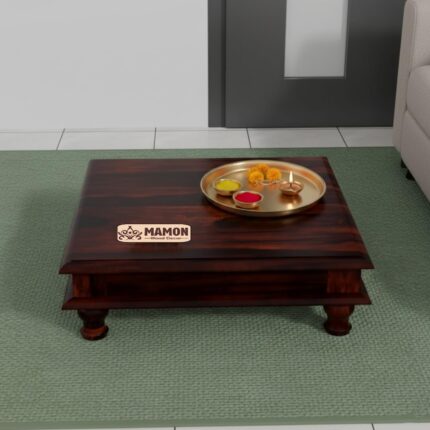
A chowki (also written chauki, and called a bajot or patla in parts of India) is a low, flat, square wooden stool with four short legs. It is the oldest piece of furniture in an Indian home and still one of the most used: it holds the idol in the pooja corner, seats a guest or a child on the floor, raises a thali at a meal, and stands a plant in the balcony. Which one to buy depends on the use, and the use sets the size.
Chowki sizes by use
Use
Top
Height
Notes
Pooja chowki, one idol
8 × 8 to 12 × 12 in
3 to 6 in
Often carved; sits inside a mandir
Pooja chowki, several idols or a kalash
15 × 15 to 18 × 18 in
6 to 9 in
Flat top, no lip, easy to wipe
Bajot for sitting or eating
18 × 18 to 24 × 24 in
8 to 12 in
Rated for a person: solid wood, 100 kg
Wedding or festival (bride and groom seat)
24 × 24 in and up
10 to 12 in
Carved or painted
Plant or lamp stand
10 × 10 to 15 × 15 in
6 to 12 in
Teak or treated wood for balconies
Woods and finishes
Sheesham: the usual solid wood, heavy and hard; a 15-inch chowki weighs 2 to 4 kg.
Teak: for a balcony or a bathroom-side pooja where water reaches.
Mango wood: light, carves well, the common wood for painted and carved chowkis.
Plywood or MDF with laminate: fine for a plant stand, not for sitting on.
For a pooja chowki, a plain oiled or lacquered finish wipes clean of ghee and kumkum; a painted one chips. For sitting, the legs should be fixed with wooden pegs or bolts, not just glue.