Writes the guides on Furniture Deals: sizes checked against the listings, prices and ratings read from Amazon India.
A dining table is one of the most useful pieces of furniture in a home. It is where family members come together for breakfast, lunch, and dinner, where children may finish their homework, and where friends and relatives gather during special occasions. Because it is used so often, the right dining table should be comfortable, practical, durable, and suitable for the available space.
Dining Table
When shopping for a dining table, one of the first decisions is the number of seats. A 4-seater may look perfect in a compact apartment, while a 6-seater can provide more flexibility for a growing family. An 8-seater may be the better choice for a joint family or a home that regularly hosts guests. However, bigger is not always better: the table should fit the room without making movement difficult.
In this guide, we compare 4-seater, 6-seater, and 8-seater dining tables, explain what to consider before buying, discuss popular wood options, and show how to check product dimensions when shopping online.
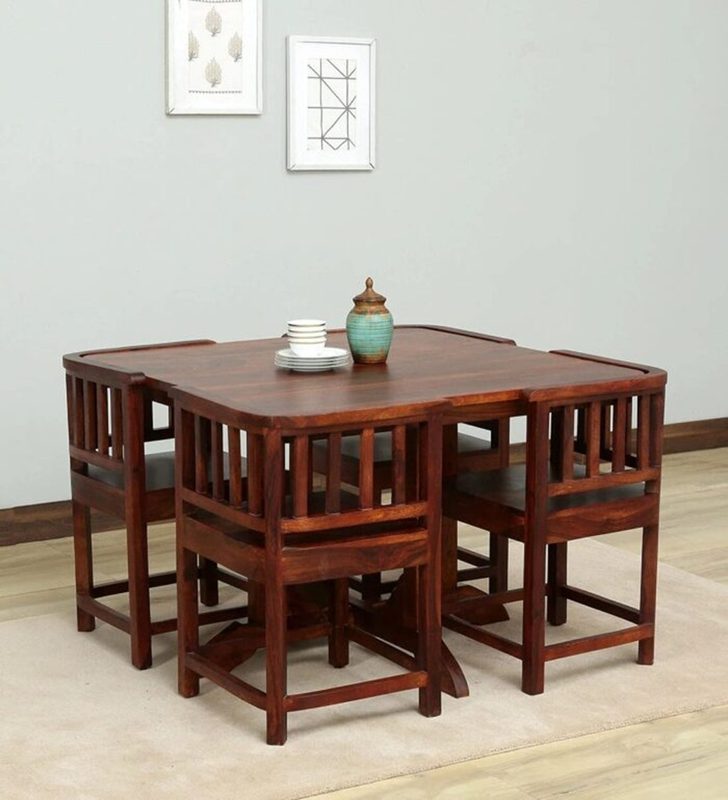
A 4-seater dining table is designed for up to four people and is often a practical choice for couples, small families, and people living in apartments. Its compact size can make it easier to place near a kitchen, in a small dining corner, or in an open-plan living and dining area. Square and small rectangular designs are common options, although the best shape depends on the layout of the room.
Space-efficient: It generally needs less floor area than larger dining sets.
Suitable for everyday meals: Four seats can comfortably serve a small household.
Easy to arrange: Compact designs can fit into corners or smaller dining spaces.
More design flexibility: Buyers can compare square, round, and rectangular styles.
Useful for multipurpose rooms: A compact table may also provide a surface for reading or light work.
Things to consider
A 4-seater may feel limiting when relatives or friends visit regularly. Before choosing one, think about how often you need extra seats. If you usually host guests, a slightly larger table may offer more flexibility, provided your room can accommodate it.
Best suited for: couples, small families, compact apartments, and dining areas where saving floor space is important.
A 6-seater dining table offers a balance between seating capacity and room size. It can work well for families with four to six members and gives you a couple of extra places when guests arrive. Rectangular tables are a familiar choice, but square and other configurations may also be available depending on the design.
Extra seating: It can accommodate a larger household or occasional visitors.
Family-friendly: It gives everyone a dedicated place during daily meals.
Flexible use: The table can also be used for board games, family activities, or serving food during gatherings.
Wide design selection: Buyers can compare traditional wooden sets and modern styles.
Balanced footprint: It offers more seating than a 4-seater without requiring as much space as many 8-seater designs.
Things to consider
Measure the room carefully before buying. A table may fit on paper but still leave too little space to pull chairs out or walk behind seated people. Check the full dimensions of the table and chairs, not just the number of seats mentioned in the product title.
Best suited for: medium-sized families, homes that entertain guests occasionally, and dining rooms with enough clearance around the table.
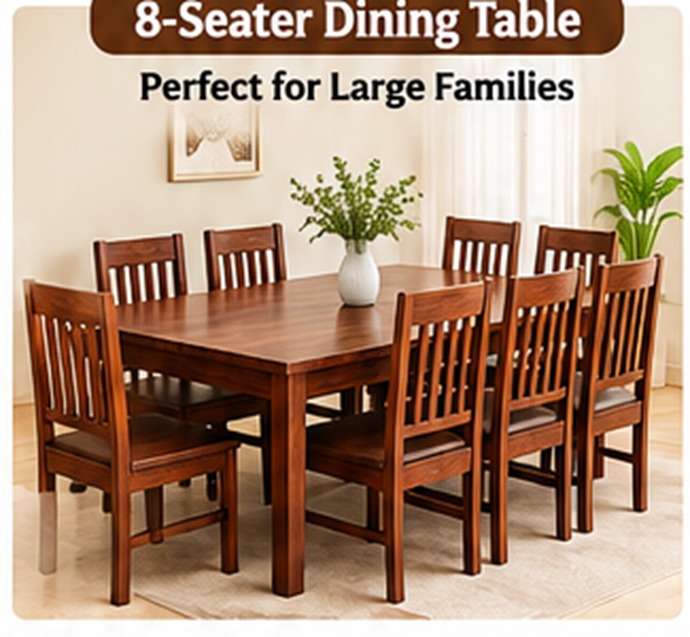
An 8-seater dining table is designed for larger households, joint families, and people who frequently host family gatherings. It can create a strong focal point in a spacious dining room and provides more room for serving dishes during shared meals. Because it has a larger footprint, it needs careful planning before purchase.
Advantages of an 8-seater dining table
More seating: It can provide places for up to eight people.
Good for joint families: More household members can sit together.
Useful for hosting: It offers additional places for visitors and celebrations.
Generous tabletop: A larger surface can provide more room for serving dishes.
Statement furniture: A well-chosen design can anchor a spacious dining area.
Things to consider
An 8-seater is not suitable for every room. Check the table footprint, chair dimensions, doorways, and the route used to bring the furniture inside. Also consider whether you will use all the seats regularly; unused furniture can take up valuable space.
Best suited for: large families, joint families, spacious dining rooms, and homes that often host guests.
This is a general comparison, not a fixed size standard. Actual dimensions, comfort, and room requirements vary by product design, chair style, and manufacturer.
5. How Much Space Do You Need Around a Dining Table?
The number of seats is only one part of choosing a dining table. You also need enough open space around it so people can sit down, pull out chairs, and move through the room. A table that fills the room from wall to wall may technically fit, but it can make everyday use uncomfortable.
Measure the length and width of the dining area before browsing products.
Mark the approximate table footprint on the floor using paper or removable tape.
Allow room for chairs to move back when someone sits down or stands up.
Check whether doors, cupboards, kitchen counters, or walkways will be blocked.
Consider the chair’s full depth and width, not only the tabletop dimensions.
If your dining area is narrow, a compact rectangular table may work better than a wide square design. For a room with a central open area, you may have more flexibility. Always use the exact measurements provided by the product seller when planning the layout.
6. Which Dining Table Shape Should You Choose?
Rectangular dining tables
Rectangular tables are commonly chosen for longer dining rooms and can make it easier to arrange seats along the two longer sides. They are available in compact and large sizes, so check the actual dimensions.
Square dining tables
Square tables can suit compact or nearly square dining areas. They create a balanced arrangement, but the available tabletop space and legroom depend on the design.
Round dining tables
Round tables have no corners and can create a more conversational seating arrangement. Check the diameter carefully, because the space needed increases as the table gets larger.
7. Which Wood Is Suitable for a Wooden Dining Table?
The wood used in a dining table affects its appearance, feel, maintenance, and price. The following are three wood types discussed in the supplied FurnitureDeals wood comparison article. Their performance can vary with wood grade, seasoning, construction, and finish.
Sheesham, also known as Indian rosewood, is widely used in North Indian furniture. It has a warm grain pattern and is commonly selected for indoor furniture such as beds, wardrobes, and dining tables. The supplied wood guide describes it as a practical option for many Indian homes, while noting that it benefits from suitable seasoning and periodic care.
Teak wood
Teak, also called sagwan, is a premium wood known for its natural oil content and moisture resistance. The supplied comparison guide identifies teak as a strong option for humid conditions and outdoor furniture, but also notes that its price is generally higher than sheesham and mango wood.
Mango wood
Mango wood is often selected for its distinctive grain and relatively budget-friendly price. The supplied guide notes that it is softer than sheesham and teak and that the quality of its finish is important. It can be worth considering for indoor furniture when the product is properly finished and maintained.
Buying tip: Do not rely on a product title alone. Read the material description carefully and check whether the listing specifies solid wood, veneer, plywood, MDF, or engineered wood.
8. Featured Wooden Dining Table Set and Its Dimensions
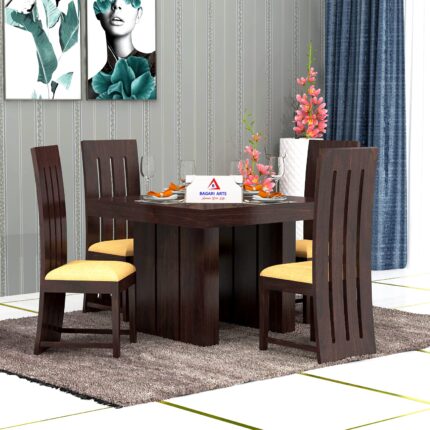
The supplied product photograph shows a dark wooden dining table with matching chairs. The chairs have vertical slats on the backrest, while the table has a broad wooden top and a traditional-looking base. The warm, dark finish gives the set a classic appearance that may suit a range of traditional or warm-toned interiors.
Dining Table
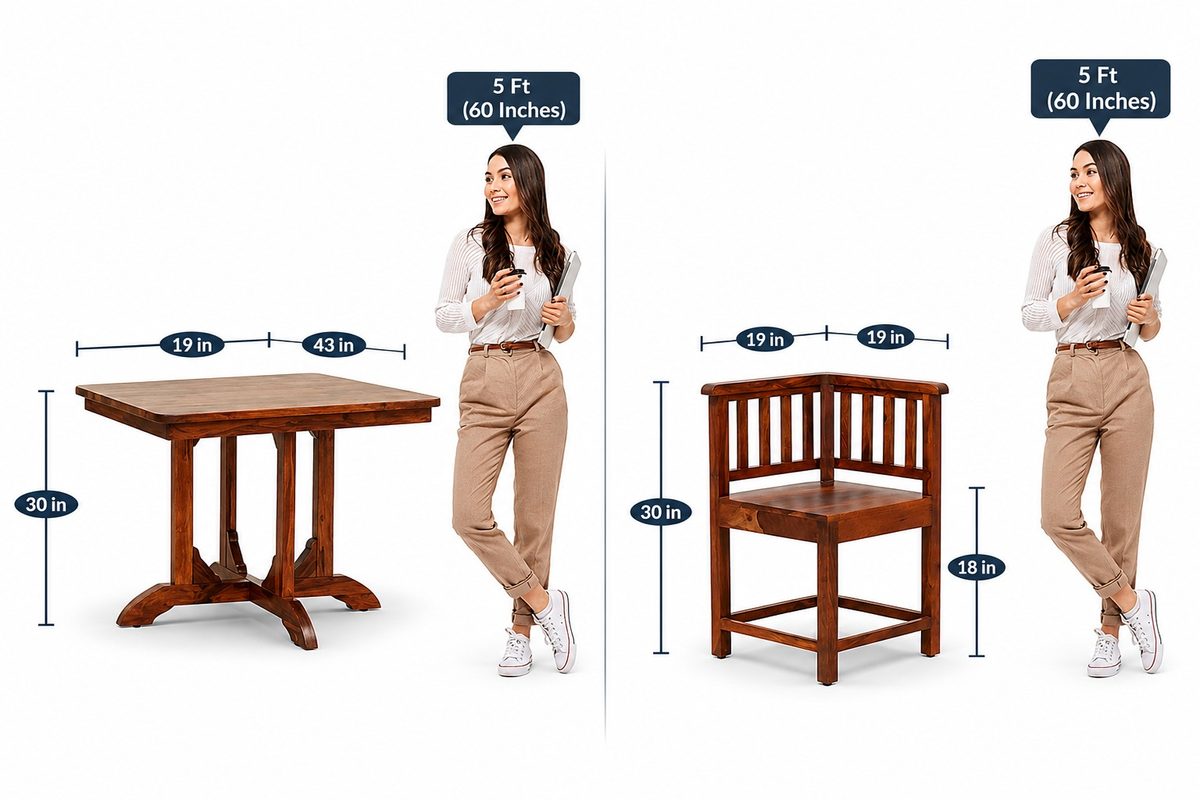
Table dimensions shown in the image
Length: 43 inches
Width: 19 inches
Height: 30 inches
Chair dimensions shown in the image
Width: 19 inches
Depth: 19 inches
Overall height: 30 inches
Seat height: 18 inches
Important: These are the measurements visible in the supplied reference images. Confirm the dimensions, number of chairs, and exact product configuration on the live product listing before making a purchase. The dimension images should not be treated as confirmation that the pictured set is a 4-, 6-, or 8-seater.
9. What to Check Before Buying a Dining Table Online
Material details: Look for the exact material name and check whether the product is solid wood, veneer, plywood, MDF, or engineered wood.
Seating configuration: Confirm how many chairs are included and how the seller describes the seating capacity.
Customer reviews: Read reviews for comments about finish, stability, assembly, packaging, and whether the product matches its photos.
10. How to Match a Dining Table with Your Home Interior
A dining table should work with the rest of the room rather than look like an unrelated piece. If your home has warm wooden furniture, a similar wood tone can create a coordinated appearance. In a modern room, a simple silhouette and clean lines may feel more consistent. In a traditional interior, a detailed wooden design can complement other classic furniture.
Coordinate the table finish with nearby furniture, flooring, or cabinet tones.
Choose chair designs that are comfortable and visually balanced with the tabletop.
Avoid overcrowding the room with an oversized table or too many decorative accessories.
Use suitable lighting above the dining area so the table is easy to use during meals.
Keep enough clear space for people to move around the dining area.
11. Common Mistakes to Avoid
Choosing only by appearance: A beautiful table may not suit your room or daily needs. Check measurements and seating first.
Ignoring chair movement: Remember that chairs need space to slide out and for people to sit comfortably.
Assuming every wood listing is solid wood: Read the full material description and ask the seller if the wording is unclear.
Not checking what is included: Confirm whether the price includes all chairs shown in the photographs.
Overlooking delivery access: Measure doorways, staircases, and lifts if the furniture is delivered in large pieces.
Skipping reviews and policies: Check buyer feedback, warranty information, and return conditions before ordering.
12. Frequently Asked Questions (FAQs)
Which dining table is best for a small family?
A 4-seater is often a practical choice for a small family because it provides four places while generally taking up less space than larger tables.
Is a 6-seater dining table suitable for a family of four?
Yes. It can provide two additional places for guests, relatives, or family activities, if the room has enough space.